


CFA Level1 December 2010 candidates


CFA exam held twice every year is scheduled on 5th December in India this year. The CFA exam essentially tests your fundamental knowledge in Finance domain. Anyone having graduate degree is eligible to appear for the exam. People having degrees in domains other than finance are also eligible. These days engineers, doctors, MBA’s who want their career in risk management, investment banking, opt for this exam.



The exam is categorized in 3 levels, based on the level of difficulty of the exam. The level 1 is held twice a year whereas level 2 and 3 are held only in June.
The syllabus is divided into following subcategories
Exam Outlines
I. Ethical and Professional Standards
A. Professional Standards of Practice
B. Ethical Practices

II. Quantitative Methods
A. Time Value of Money
B. Probability
C. Probability Distributions and Descriptive Statistics
D. Sampling and Estimation
E. Hypothesis Testing
F. Correlation Analysis and Regression
G. Time Series Analysis
H. Simulation Analysis
I. Technical Analysis

III. Economics
A. Market Forces of Supply and Demand
B. The Firm and Industry Organization
C. Measuring National Income and Growth
D. Business Cycles
E. The Monetary System
F. Inflation
G. International Trade and Capital Flows
H. Currency Exchange Rates
I. Monetary and Fiscal Policy
J. Economic Growth and Development
K. Effects of Government Regulation
L. Impact of Economic Factors on Investment Markets

IV. Financial Reporting and Analysis
A. Financial Reporting System (IFRS and GAAP)
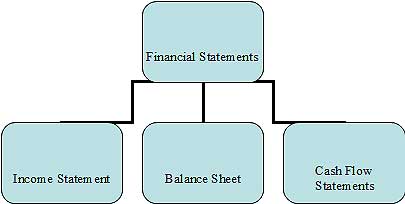
B. Principal Financial Statements
C. Financial Reporting Quality
D. Analysis of Inventories
E. Analysis of Long-Lived Assets
F. Analysis of Taxes
G. Analysis of Debt
H. Analysis of Off-Balance-Sheet Assets and Liabilities
I. Analysis of Pensions, Stock Compensation, and Other Employee Benefits
J. Analysis of Inter-Corporate Investments
K. Analysis of Business Combinations
L. Analysis of Global Operations
M. Ratio and Financial Analysis

IX. Alternative Investments
A. Types of Alternative Investments and Their Characteristics
B. Real Estate
C. Private Equity/Venture Capital
D. Hedge Funds
E. Closely Held Companies and Inactively Traded Securities
F. Distressed Securities/Bankruptcies
G. Commodities
H. Tangible Assets with Low Liquidity

V. Corporate Finance
A. Corporate Governance
B. Dividend Policy
C. Capital Investment Decisions
D. Business and Financial Risk
E. Long-Term Financial Policy
F. Short-Term Financial Policy
G. Mergers and Acquisitions and Corporate Restructuring

VI. Equity Investments
A. Types of Equity Securities and Their Characteristics
B. Equity Markets: Characteristics, Institutions, and Benchmarks
C. Fundamental Analysis (Sector, Industry, Company) and the Valuation of Individual Equity Securities
D. Equity Market Valuation and Return Analysis
E. Special Applications of Fundamental Analysis (Residual Earnings)
F. Equity of Hybrid Investment Vehicles

VII. Fixed Income
A. Types of Fixed-Income Securities and Their Characteristics
B. Fixed-Income Markets: Characteristics, Institutions, and Benchmarks
C. Fixed-Income Valuation (Sector, Industry, Company) and Return Analysis
D. Term Structure Determination and Yield Spreads
E. Analysis of Interest Rate Risk
F. Analysis of Credit Risk
G. Valuing Bonds with Embedded Options
H. Structured Products

VIII. Derivatives
A. Types of Derivative Instruments and Their Characteristics
B. Forward Markets and Instruments
C. Futures Markets and Instruments
D. Options Markets and Instruments
E. Swaps Markets and Instruments
F. Credit Derivatives Markets and Instruments

X. Portfolio Management and Wealth Planning
A. Portfolio Concepts
B. Management of Individual/Family Investor Portfolios
C. Management of Institutional Investor Portfolios
D. Pension Plans and Employee Benefit Funds
E. Investment Manager Selection
F. Other Institutional Investors
G. Mutual Funds, Pooled Funds, and ETFs
H. Economic Analysis and Setting Capital Market Expectations
I. Tax Efficiency
J. Asset Allocation (including Currency Overlay)
K. Portfolio Construction and Revision
L. Equity Portfolio Management Strategies
M. Fixed-Income Portfolio Management Strategies
N. Alternative Investments Management Strategies
O. Risk Management
P. Execution of Portfolio Decisions (Trading)
Q. Performance Evaluation
R. Presentation of Performance Results

The fees of the exam is 1110 USD. The last day of registeration is 24th August. Post enrollment, the candidate is given CFA cirriculam and material.

Preparation for the exam
The exam is easier for candidates who are from finance background, but could be a bit tricky for non-finance backgound candidates. It requires regular practice and study for at least 4-5 months to pass the exam. Ethics and Financial statement ananlysis carry maximum weightage. Students are also expected to clear cutoff of every section separately. The syllabus is pretty vast as it covers domains of Mathematics, Finance, Derivates, Equities and Ethics.

Essentially, a sytematic approach towards your preparation can help you master the fundamentals and ace the exam. Practicing numerical and theory questions,everyday from CFA material, can help you understand about the genre of questions asked in the exam. It’s also important to know that just reading the material won’t be sufficient to clear the cutoff, as the exam is competitive, questions can be tricky. A clear cut approach is to practice as many mock exams as possible, revising important formulae and their application can help you gain the insight on how to attempt the question.


Related posts:


avatar Pristine is India’s largest training provider for international certifications like CFA®, FRM®, PRM®. It has been found by industry professionals who have worked in the area of investment banking and private equity in organizations such as Goldman Sachs, Crisil - A Standard & Poors Company, Standard Chartered and Accenture. Pristine has conducted more than 500,000 man-hours of quality training in finance. It has conducted trainings for J. P. Morgan, Bank of America, E&Y, ING Vysysa, IIM Calcutta, NUS Singapore, ISB and others.

Tags: , , , , , , , , ,