


Company Profile Founded by IIT/IIM professionals with experience in investment banking and private equity, Pristine is one of the largest institutions for finance trainings in India. Pristine has some of the most savvy investors such as Accel Partners, Dr. Mark Mobius (Franklin Templeton) and Rajesh Sehgal (Franklin Templeton). Pristine is the pioneer of open source [...]
Job: Opening in Investment Research
Disclaimer: This is to clarify that Pristine has no economic interest in any job postings that are done at our website except for those being offered by Pristine. The job postings are for information purpose only and are aimed at participants who are pursuing studies in the area of finance. Any due diligence that has [...]
Job: Associate with MX Capital
MX Capital is a boutique investment bank focused on Private Equity, M&A and Strategic Advisory. The Associate will work on and be exposed to the entire deal life cycle – from sourcing to execution. Daily tasks include but are not limited to: financial modelling, preparing pitchbooks / presentations, researching & analysing sectors / companies, coordinating with third parties (e.g. due diligence agencies), coordinating process for deals, etc.
Job: Investment Manager at Jasper
Jasper is a SEBI registered Discretionary Portfolio Manager. We offer client focused Equity investment solutions to High Net Worth Individuals, Corporates, Trusts and other Institutions. Jasper endeavors to enhance wealth of its clients by building a diversified Portfolio capable of generating sustainable and consistent returns. Towards this end, we follow disciplined and research driven approach to investing.

Jobs: Opening with ALM Solutions
Eligibility Masters/Post Graduate in Finance/CA/ICWA/FRM/PRM/CFA Experience in Financial Risk Management/Treasury/Asset Liability Management Basic Knowledge of Financial Products and Markets and Understanding of functioning of these markets Job Description for Asst. Manager/ Sr. Business Analyst/Business Analyst – Presales The job profile shall include the presales activities for Banking and Financial Services Products like Treasury, Risk Management, [...]

Career in financial planning
Is there a market for financial planning
-The Indian economy is growing at a breath-taking speed of 15.9% p.a. compared to global average of 5.2% during 2000 to 2005.

-In absolute numbers the economy has grown from US $ 268 billion in 2000 to US $ 559 billion in 2005
-The incremental wealth is reflected in the number of home-grown millionaires (US $ terms) in India, which presently stands around 83000 and is still growing at a rate of 15% every year.

-To sustain the growth, we need qualified Financial Planners who will not only help people to manage and grow their money but also play a major role in allocating household surpluses to fuel the growth.

Difference between career in finance and in accounting
Accounting is essentially subset of finance, in terms of discipline. However if we see the career path and the kind of role played in both the disciplines, it differs considerably.
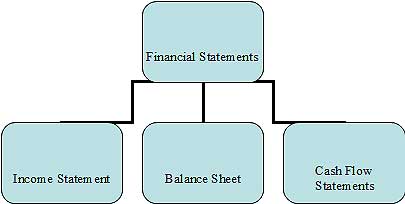
Accounting involves data measuring, filling and mainteanance of financial statements i.e income statement, balance sheet, cash flow statement, hence financial position of a firm can be assessed. People who specialize these activities are designated as accountants.
An accountant is expected to keep track of company’s transactions, tax paid records etc accurately. The analysis and communication of financial information of various companies, is also categorized as the role performed by accountants. Many accountants also do budget analysis, financial planning, IT consulting and some legal services like auditing. The auditer typically audits the financial reports of the firms, and give independent opinion on whether the information given in the statements is accurate and free from material errors.
Lehman crisis, now Euro debt crisis, should you go for a career in finance?
A lot of people these days are skeptical about going for MBA, or career in finance, as economies worlwide are still on the process of recovering from US recession and now Euro debt crisis.
The Lehman crisis in 2008 had resulted in huge number of layoffs, and a lot of unemployment in markets. The worst affected domain was of course finance. Nonetheless the economies, with respect to number of employements, in Asia and Europe performed better than US. Post US recession, Euro debt crisis has taken its toll on economies worldwide.
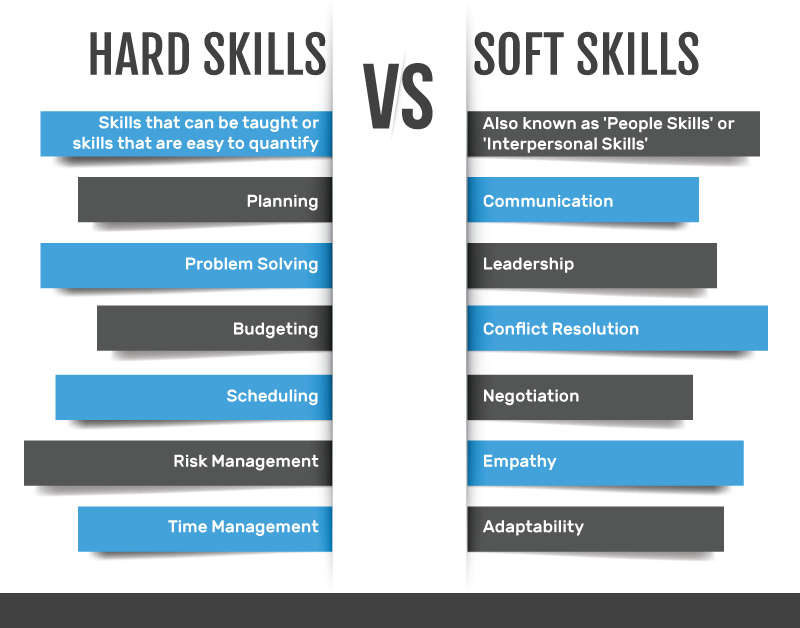
Leading investment banks and other financial services firms have made their recruitment process more demanding and rigorous. The employers want best industry professionals, who can excel in their domains. Firms are looking for team players, leaders, good listeners, speakers, fast learners who can add value to their businesses. Apparently nowadays it’s not just true for finance domain, all industries engineering, IT, Telecom, give prime importance to these traits. In terms of qualification, a lot of importance is also given to candidates who are MBA’s, CA’s, CFA’s, FRM’s, who have thorough domain knowlege.
Finance domain for Engineers
Everyday we come across questions on when, whether and who should give CFA, FRM exam? Does qualifying these exams ensures a job?
CFA, FRM exams are prestigious worldwide recognized degree exams. They give professional designation to financial analysts who complete a series of exams.
It’s not mandatory that you have to be a professional in finance domain to appear for this exam. These days, engineers, doctors and professionals from other backgrounds who want pursue a career in finance domain opt for these exams.
Qualifying these exams don’t ensure a job but certainly can give you an edge over others. It would be an add on qualification to your career and resume. Companies shortlist the prospective employee’s CV through searching their database on important terms like “CFA”, “FRM“, if these terms appear in your resume, your resume become’s a potential candidate’s CV.
Career Opportunities for a Financial Analyst
For those of you who are relatively new to finance domain and are considering a career as a Financial Analyst, here we take a look at the who-how-what aspects of a Financial Analyst’s job:
You would easily encounter the term Financial Analyst if you follow any business newspapers like the wall street journal or in magazines like the economist.
Here’s a look at an FA’s work profile :
A financial analyst researches macroeconomic and microeconomic conditions along with company fundamentals to make business, sector and industry recommendations. They also often recommend a course of action, such as to buy or sell a company’s stock based upon its overall current and predicted strength. An analyst must be aware of current developments in the field in which he or she specializes as well as in preparing financial models to predict future economic conditions for any number of variables.