


As risk management continues its evolution, reputation management is emerging as a key issue for all enterprises.

In a world economy that is both global and volatile, intangible assets have become a significant chunk of wealth of many companies. Although some assets, like copyrights and licences, brands and leases, may be assessed, the composite ‘reputation’– defined here as the excess value over the total physical assets – can only be derived from the financial market’s evaluation of the company’s shares.

There are factoes that impact the long-term reputational standing of any organisation, and these apply to not-for-profit entities as well as to local authorities and public or private healthcare providers.
Managing reputation is therefore an essential part of the strategic role of the board of directors of a firm, who need to take into account all stakeholders, whose perception of the organisation will determine its reputation. Risks or uncertainties needto be addressed in a holistic systemic approach, as there is no such thing as reputation risks rather, all risks may impact on reputation. Thus the best management of risks to reputation is sound enterprise-wide risk management and governance, where all insiders are involved and external interests are taken into account.
Reputation Risk management
Financial Modelling: An imperative sound for decision making
What is Financial Modelling?
Financial modeling is the task of building an abstract representation of a financial decision making situation. This is a mathematical model, such as a computer simulation, designed to represent the performance of a financial asset or a portfolio, of a business, a project, or any other form of financial investment.
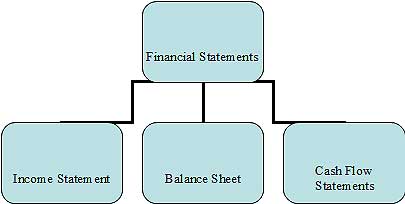
Theoretically speaking, a financial model is a set of assumptions about future business conditions that drive projections of a company’s revenue, earnings, cash flows and balance sheet accounts.
However, financial modeling is a general term that means different things to different users. In the US and particularly in business schools it means the development of a mathematical model, often using complex algorithms, and the associated computer implementation to simulate scenarios of financial events, such as asset prices, market movements, portfolio returns and the like. Or it might mean the development of optimization models for managing and controlling the risk of a financial investment. In Europe and in the accounting profession financial modelling is defined as cash flow forecasting, involving the preparation of large, detailed spreadsheets for management decision making purposes.