


logo
info@edupristine.com
+91 80800 05533

Bankruptcy Risk

Bankruptcy is a legally declared inability or impairment of ability of an individual or organization to pay its creditors. Creditors may file a bankruptcy petition against a debtor (“involuntary bankruptcy”) in an effort to recoup a portion of what they are owed or initiate a restructuring. In the majority of cases, however, bankruptcy is initiated by the debtor (a “voluntary bankruptcy” that is filed by the insolvent individual or organization).

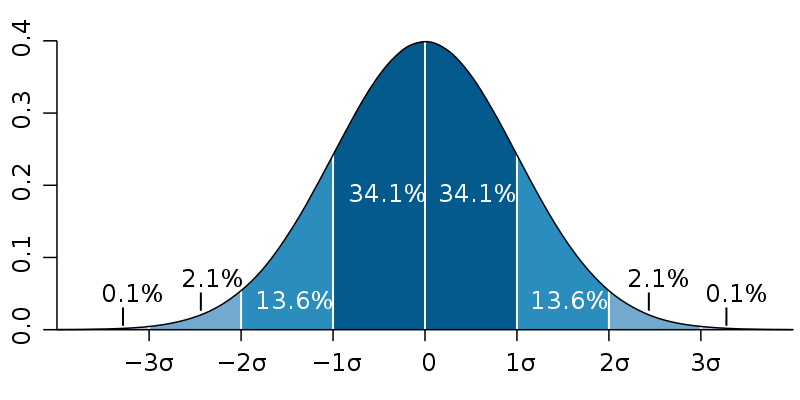
Practical application of Probability in Finance

Probability and Statistics are tools for modelling financial markets there risks and returns. The topics are also covered in many finance exams like CFA conducted by CFA institute www.cfainstitute.org, FRM conducted by GARP www.garp.com, PRM conducted by PRMIA www.prmia.org.
A lot of candidates skip this section, finding it hard to understand. However if you see the practical application of probability you will understand its importance in finance domain.
There are a lot of real world applications of probability as can be widely seen in portfolio expected returns and variance.
Probability in broad sense is term used to indicate vague possibility that something might happen. It is also used synonymously with chance.

FRM 2010 November Exam Details

GARP www.garp.com, FRM Exam is to be held on November 20, 2010. The registeration for the exam is started from 1st June, 2010.
This time GARP has introduced a new exam format, with the exam consisting of two parts. Both the parts have different format and structure in terms of fees, syllabus and topics covered. Passing in the first part is mandatory for level 2 to be graded. If a candidate fails in part 1, part 2 will not be graded. Hence, next time if the candidate re registers he has to enroll for both the parts.
Part1 Details -
Total Number of Questions 100 MCQ’s,
Time 4 hour
topics with weightage
Foundation of Risk Management 20%
Quantitative Analysis 20%
Financial Markets and Products 30%
Valuation and Risk Models 30%

FRM Summarized Recordings

FRM Summarized Recordings – USD 19 Hope your preparation for the FRM Exam is going well, given the large number of concepts and formulas involved in the FRM Examination, one is bound to be lost in the maze. If we take a detailed look, there would be more than 1000 concepts and formulas to be [...]

World Economy : Is the “Worst Over” ?

At a recent informal meet in Canada, Finance ministers from the world’s top seven industrialised (G7) nations wound up their informal chats, summed up that the worst for the economic crises was over. But at the same admitted that the recovery from the global recession is still weak.

Expressing cautious optimism over the recovery, they said their governments would continue with stimulus spending to speed up the recovery process.
This is important, because the world economy stands in a very vulnerable state at the moment and one misguided step can make the economy slip back to the state it was a year back or maybe worse.
This is IMF’s take on the present situation:
THE GLOBAL economy appears to be recovering and the worst is definitely over, chairman of the International Monetary Fund Youssef Boutros-Ghali said last week.

Key Individual Risk Management: Learning from the Polish Tragedy

The tragedy involving Poland’s president and other key political, military and civilian officials in a airplane landing crash clearly underlines the significance of having an effective individual risk management strategy in place. It has prompted some corporations to review their procedures for protecting executives and other valued employees.
Polish President Kaczynski, his wife along with other key officials perished earlier this month when the “Tupolev Tu-154″ plane, part of the government fleet crashed while landing in dense fog at Smolensk, Russia. The President’s visit was on account of a ceremony commemorating the 1940 Soviet massacre of Polish military officers and civilians.
The accident exposes how unprofessionally many governments manage the risk of losing key leaders.
It is unlikely that a risk-savvy company in charge of such an event would have let such important group of individuals to travel together.

Reputation Risk management

As risk management continues its evolution, reputation management is emerging as a key issue for all enterprises.

In a world economy that is both global and volatile, intangible assets have become a significant chunk of wealth of many companies. Although some assets, like copyrights and licences, brands and leases, may be assessed, the composite ‘reputation’– defined here as the excess value over the total physical assets – can only be derived from the financial market’s evaluation of the company’s shares.
There are factoes that impact the long-term reputational standing of any organisation, and these apply to not-for-profit entities as well as to local authorities and public or private healthcare providers.
Managing reputation is therefore an essential part of the strategic role of the board of directors of a firm, who need to take into account all stakeholders, whose perception of the organisation will determine its reputation. Risks or uncertainties needto be addressed in a holistic systemic approach, as there is no such thing as reputation risks rather, all risks may impact on reputation. Thus the best management of risks to reputation is sound enterprise-wide risk management and governance, where all insiders are involved and external interests are taken into account.

US Financial Regulation Reform

Under Obama, US is tackling the serious issues it inherited. The world economy, while in poor shape, has not caved, and signs of recovery are evident, pushed by stimuli, bailouts. And now, he has taken the health care issues ignored for decades. One other significant area of development has been Financial Regulation Reform. Here are [...]

Rebounding from the Recession

With the world economy on path of recovery, banks around the world are starting to wrap-up emergency monetary-policy measures. Some have begun to raise benchmark interest rates, and many more are expected to follow this year. All this at a time when the recovery in many economies remains shaky will be tricky, and a capricious exit from expansionary policies might lead to macroeconomic and financial-market turmoil.


The normalisation of monetary policy presents two broad category risks on a macro-level. The first and the most ominous is that policymakers in key economies will miss the boat: tightening too much, too little or doing it at the wrong time. Capping supportive policies before the economy is able to get back on its feet could impede the recovery preocess.; and if this were to occur in the developed countries, it would imperil global GDP growth.

Boot Strap Method

Boot Strap method is used to calculate the spot rate curve, when the prices of the bonds of different maturity and the coupon payment associated with the bond is available.
I have attached an excel sheet which describes the process of calculating 4 spot rates when prices of 4 bonds of different maturity are available.
Tags: Boot Strap Method, CFA, CFA 2010, cfa 2011, cfa exam, CFA training, FRM, FRM 2010, risk management positions.