


At a recent informal meet in Canada, Finance ministers from the world’s top seven industrialised (G7) nations wound up their informal chats, summed up that the worst for the economic crises was over. But at the same admitted that the recovery from the global recession is still weak.

Expressing cautious optimism over the recovery, they said their governments would continue with stimulus spending to speed up the recovery process.
This is important, because the world economy stands in a very vulnerable state at the moment and one misguided step can make the economy slip back to the state it was a year back or maybe worse.
This is IMF’s take on the present situation:
THE GLOBAL economy appears to be recovering and the worst is definitely over, chairman of the International Monetary Fund Youssef Boutros-Ghali said last week.
World Economy : Is the “Worst Over” ?
Key Individual Risk Management: Learning from the Polish Tragedy
The tragedy involving Poland’s president and other key political, military and civilian officials in a airplane landing crash clearly underlines the significance of having an effective individual risk management strategy in place. It has prompted some corporations to review their procedures for protecting executives and other valued employees.
Polish President Kaczynski, his wife along with other key officials perished earlier this month when the “Tupolev Tu-154″ plane, part of the government fleet crashed while landing in dense fog at Smolensk, Russia. The President’s visit was on account of a ceremony commemorating the 1940 Soviet massacre of Polish military officers and civilians.
The accident exposes how unprofessionally many governments manage the risk of losing key leaders.
It is unlikely that a risk-savvy company in charge of such an event would have let such important group of individuals to travel together.
Reputation Risk management
As risk management continues its evolution, reputation management is emerging as a key issue for all enterprises.

In a world economy that is both global and volatile, intangible assets have become a significant chunk of wealth of many companies. Although some assets, like copyrights and licences, brands and leases, may be assessed, the composite ‘reputation’– defined here as the excess value over the total physical assets – can only be derived from the financial market’s evaluation of the company’s shares.
There are factoes that impact the long-term reputational standing of any organisation, and these apply to not-for-profit entities as well as to local authorities and public or private healthcare providers.
Managing reputation is therefore an essential part of the strategic role of the board of directors of a firm, who need to take into account all stakeholders, whose perception of the organisation will determine its reputation. Risks or uncertainties needto be addressed in a holistic systemic approach, as there is no such thing as reputation risks rather, all risks may impact on reputation. Thus the best management of risks to reputation is sound enterprise-wide risk management and governance, where all insiders are involved and external interests are taken into account.
US Financial Regulation Reform
Under Obama, US is tackling the serious issues it inherited. The world economy, while in poor shape, has not caved, and signs of recovery are evident, pushed by stimuli, bailouts. And now, he has taken the health care issues ignored for decades. One other significant area of development has been Financial Regulation Reform. Here are [...]
Rebounding from the Recession
With the world economy on path of recovery, banks around the world are starting to wrap-up emergency monetary-policy measures. Some have begun to raise benchmark interest rates, and many more are expected to follow this year. All this at a time when the recovery in many economies remains shaky will be tricky, and a capricious exit from expansionary policies might lead to macroeconomic and financial-market turmoil.


The normalisation of monetary policy presents two broad category risks on a macro-level. The first and the most ominous is that policymakers in key economies will miss the boat: tightening too much, too little or doing it at the wrong time. Capping supportive policies before the economy is able to get back on its feet could impede the recovery preocess.; and if this were to occur in the developed countries, it would imperil global GDP growth.
Risk Management from Project Manager’s Perspective
The Key to Effective Project Risk Management
Effective project risk management is very significant for the success of a project. Project risks which remain unidentified or which are not controlled in any manner are bound to eventually to undermine all other areas of project management.
Specifically, projects risks that are not adequately managed impact the time, quality and financial constraints of a project or even the organisation as a whole.
How to define Project Risk Management?
Project Risk management is a proactive process for the identification, assessment and management of risks.
In the project management context, the fundamental idea remains the same. Project risk management is a process of looking forward, identifying potential risks, analysing and assessing them and then putting plans in place to measure or cater to them.
Chinese Dollar Reserve Risk Management
World financial sphere is concerned with the way China is using trade, currency Rules to boost its exports. Seeking to maintain its export dominance, China is engaged in a two-pronged effort:
(a) fighting protectionism among its trade partners and
(b) holding down the value of its currency.
This has already drawn world’s ire on China. Washington wants Beijing to abandon a currency peg against the dollar that U.S. lawmakers believe gives Chinese exports an unfair advantage in world trade and so steals American jobs.
But the Chinese are vigorously defending their economic policies. Premier Wen Jiabao criticized international pressure on China to let the currency appreciate, calling it “finger pointing.” He said that the renminbi, China’s currency, would be kept “basically stable”.
Additionally, China has already begun the process of diversifying its foreign exchange reserve assets, pushing settlement in yuan with its trading partners, and pressuring the US government to be responsible in its fiscal policy.
GARP confers Risk Management award to Chinese Banking Regulators
Chinese banking regulators received a top award from Global Association of Risk Professionals (GARP) at New York in February this year.
Both, the China Banking Regulatory Commission (CBRC) and its chairman Liu Mingkang were jointly bestowed the Risk Manager of the year 2009 by the Global Association of Risk Professionals (GARP) at the association’s 11th annual conference.
The award is presented in recognition of outstanding contributions to the financial risk management profession.
Richard Apostolik, the current president and CEO of GARP lauded the duo: “We are pleased to recognize CBRC and Mr. Liu Mingkang for their key role in orchestrating the recapitalization of China’s largest state-owned banks”.
He praised CBRC and Liu for their efforts to implement numerous disciplined risk management practices, regulatory oversight policies and corporate governance initiatives, and for their strong commitment to the importance of prudential banking regulation.
He added that this award, “takes on special meaning at a time when the recent financial crisis left many of the world’s largest banks on the brink of failure”.
Financial Modelling: An imperative sound for decision making
What is Financial Modelling?
Financial modeling is the task of building an abstract representation of a financial decision making situation. This is a mathematical model, such as a computer simulation, designed to represent the performance of a financial asset or a portfolio, of a business, a project, or any other form of financial investment.
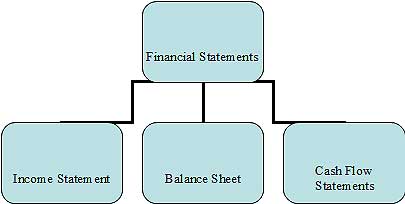
Theoretically speaking, a financial model is a set of assumptions about future business conditions that drive projections of a company’s revenue, earnings, cash flows and balance sheet accounts.
However, financial modeling is a general term that means different things to different users. In the US and particularly in business schools it means the development of a mathematical model, often using complex algorithms, and the associated computer implementation to simulate scenarios of financial events, such as asset prices, market movements, portfolio returns and the like. Or it might mean the development of optimization models for managing and controlling the risk of a financial investment. In Europe and in the accounting profession financial modelling is defined as cash flow forecasting, involving the preparation of large, detailed spreadsheets for management decision making purposes.
Lehman Bros’ fancy accounting
There has been much furore in financial sphere over the recent revelation of misleading accounting techniques used by Lehman Bros.
An accounting trick, known as the Repo 105 aided financial relief to Lehman Brothers just before its supernova collapse. It now seems that the shenanigans spells used by them may cast a legal jeopardy for executives of Lehman and its auditors Ernst & Young.
The implosion of Lehman Brothers Holdings Inc. into the biggest bankruptcy in U.S. history in September 2008 led the financial meltdown that plunged the economy into the most severe recession since the 1930s, which now thankfully shows some signs of recovery.