


Hi Guest ( Login)

Call Now - Pristine  +1 347 647 9001 / +1 551 226 2928

Blog

Balance Sheets – Assets, Liabilities & Equity

March 4th, 2010

Comments (3)

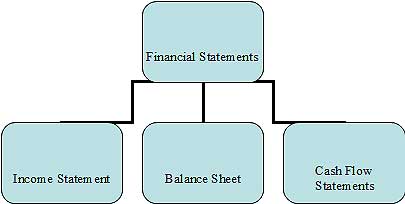
A Balance Sheet or Statement of financial position is a summary of the financial balances of a sole proprietorship, a business partnership or a company. Assets, liabilities and ownership equity are listed as of a specific date, such as the end of its financial year. A balance sheet is often described as a "snapshot of a company's financial condition". There are four types of basic financial statements: 1. Balance sheet: also referred to as statement of financial position or condition, reports on a company's assets, liabilities, and Ownership equity at a given point in time. 2.Income statement: also referred to as Profit and Loss statement, reports on a company's income, expenses, and profits over a period of time.Profit & Loss account provide information on the operation of the enterprise. These include sale and the various expenses incurred during the processing state. 3. Statement of retained earnings: explains the changes in a company's retained earnings over the reporting period. 4. Statement of cash flows: reports on a company's cash flow activities, particularly its operating, investing and financing activities. Out of the above, balance sheet is the only statement which applies to a single point in time. A balance sheet reveals a company's assets, liabilities and owners' equity (net worth). The balance sheet, together with the income statement and cash flow statement, make up the cornerstone of any company's financial statements. If you are a shareholder of a company, it is important that you understand how the balance sheet is structured, how to analyze it and how to read it. How the Balance Sheet Works? The balance sheet is divided into two parts that, based on the following equation, must equal each other, or balance each other out. The main formula behind balance sheets is: Assets = Liabilities + Shareholders' Equity There is one more way to look at the same equation: assets equals liabilities plus owner's equity. Looking at the equation in this way shows how assets were financed: either by borrowing money (liability) or by using the owner's money (owner's equity). Balance sheets are usually presented with assets in one section and liabilities and net worth in the other section with the two sections "balancing." A brief classificaion of Assets: -Current assets (a) Inventories (b) Cash and cash equivalents (c) Accounts receivable (d) Prepaid expenses for future services that will be used within a year -Fixed assets (a) Investment property, such as real estate held for investment purposes (b) Intangible assets (c) Financial assets (d) Property, plant and equipment (e) Biological assets, which are living plants or animals. (f) Investments accounted for using the equity method Classification of Liabilities: (a) Liabilities and assets for current tax (b) Deferred tax liabilities and deferred tax assets (c) Accounts payable (d) Financial liabilities, such as promissory notes and corporate bonds (e) Minority interest in equity (f) Issued capital and reserves attributable to equity holders of the Parent company (g) Provisions for warranties or court decisions (h) Unearned revenue for services paid for by customers but not yet provided Classification of Equity: (a) Description of rights, preferences, and restrictions of shares (b) Treasury shares, including shares held by subsidiaries and associates (c) Shares reserved for issuance under options and contracts (d) Numbers of shares authorized, issued and fully paid, and issued but not fully paid (e) Par value of shares (f) Reconciliation of shares outstanding at the beginning and the end of the period (g) A description of the nature and purpose of each reserve within owners' equity Here's a sample Balance sheet: balance_sheet


  • sudha

    good article for account receivables management

  • http://www.sutisoft.com sudha

    I want more clarification about Account Receivables

  • Karan

    usefulllllllllllllll

About the Author

avatar

EduPristine

EduPristine is India’s largest training provider for international certifications like CFA®, FRM®, PRM®. It has been found by industry professionals who have worked in the area of investment banking and private equity.

FREE 10 days
CFA trial course

See Details
Review edupristine.com on alexa.com

Welcome to Pristine!

Get the best in finance trainings and join our 10,000+ satisfied registered member community today.

Join 10 Days Free CFA Course & Download Free CFA Cheat Sheet

   
:    
   

Your E-mail is safe with us.

No credit card required.

Not sure if this is right course for you?

Speak to our Counselor on +1 347 647 9001

or

Fill in your information and get a customized report

Name

Email *

Phone number

city

Highest Degree *

Background *

eg. student, finance, non-finance

Current Organisation *

Comments *

* This report would be customized based on the information you provide above. You are helping the expert guide
you better by filling the information

Get a Customized Career Guidance Report   |   Access Power Resume Building Tips
Learn from the Experience of CFA Charter Holders and Finance Professionals   |   Get a Planner to Great Career