


The webinar conducted by Pristine for FRM Part II candidates on Credit Risk in the month of August 2011, for launching it’s 2011 batch. Pristine has a laudable record of a 90% pass percentage in it’s last FRM Part II batch.
Working with SHRi Corp. in Singapore
We are pleased to announce that Pristine has tied up with SHRi Corp. to provide trainings in the areas Financial Risk Management, Financial Modeling and HR Analytics. Starting this July, students can get in touch with SHRi Corp. if they want class room trainings in Singapore. Corporates interested in Pristine’s corporate training programs may also [...]
Job openings: Consultant at Asymmetrix
About Asymmetrix Asymmetrix is an advisory and solutions firm in the area of risk management. Our areas of expertise cover credit, market and operational risk from regulatory as well as economic risk perspective. The role will include working on consulting assignments related to risk management and Basel II. To know more about us, visit www.asymmetrix.co.in [...]
CFA or MBA?
A lot of people have the question if they should pursue CFA or MBA? Which certification you should take depends solely on your professional goals. CFA and MBA both the degrees are expensive, require time and a lot of effort on student’s part. It is very important to note the distinction between these two certifications. MBA is masters degree in business administration, where students are introduced to various areas of business like accounting, marketing, human resources, operations management. There are also Business schools which offer Phd and master courses specializing in specific domains like consulting, finance, marketing etc. The career path after MBA, depends on a lot of factors, including your area of interest, previous work experience and business acumen of specific domain. A lot of employers recruit MBA’s for team manager’s profile where the employee is expected to manage and take quick decisions in their domains. The basic type of MBA courses are typically full time (2 years), part time for evening and weekend batches . There are also Executive MBA’s which are specifically meant for more work experience people. Nowadays, professionals engineers, CA’s, Doctors, politicians go for MBA. Most of the business schools also prefer candidates with at least 4 -5 years of work experience. Almost all of the top B schools recognize GMAT exam ‘s score to test student’s aptitude. However, just giving the exam does not guarantee you an admission, there are a lot of other criterias also that B schools look for, like your past academic record, work experience, other academic qualifications and certifications etc. B Schools in India take CAT, SAT, XAT exams as there enterance examination.
Difference between career in finance and in accounting
Accounting is essentially subset of finance, in terms of discipline. However if we see the career path and the kind of role played in both the disciplines, it differs considerably.
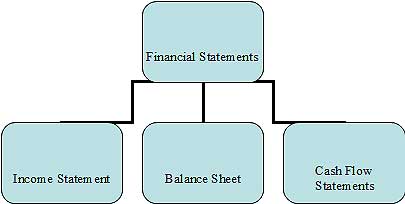
Accounting involves data measuring, filling and mainteanance of financial statements i.e income statement, balance sheet, cash flow statement, hence financial position of a firm can be assessed. People who specialize these activities are designated as accountants.
An accountant is expected to keep track of company’s transactions, tax paid records etc accurately. The analysis and communication of financial information of various companies, is also categorized as the role performed by accountants. Many accountants also do budget analysis, financial planning, IT consulting and some legal services like auditing. The auditer typically audits the financial reports of the firms, and give independent opinion on whether the information given in the statements is accurate and free from material errors.
Pristine to provide faculty for NISM course, starting June 2010
Pristine is proud to announce that owing to its commitment to quality education in finance its faculty has been selectedto act as an visiting faculty for National Institute of Securities Markets (NISM) course – Certificate in Financial Engineering and Risk Management (CFERM). NISM has been established by SEBI to promote securities market education and research. [...]
Stack and Roll Hedge
Strip Hedge vs Stacked Hedge
• Suppose a firm faces a series of dates (or periods) on which it faces price risk. That is, it has a year (or longer) of production. It can:
– Use a “strip” of futures contracts, each with a different delivery date.
– Use a stack hedge, in which the most nearby and liquid contract is used, and it is rolled over to the next-to-nearest contract as time passes.
• An oil distributor agrees to deliver $1mn of crude oil in each of the next 10 years, at a fixed price from 1st Jan, 2011. The firm faces the risk that crude oil prices will ___ (rise or fall?), and therefore will enter into a ___ (long or short?) hedge.
Career in Risk Management
In the preceding post we talked about job as a financial analyst.
Today we discuss Risk Management as a career.
Overview Risk Management:
Within the financial services industry, risk management involves assessment and quantification of business risks, and then taking measures to control or reduce them.
Educational requirements:
To work in risk management, a bachelor’s degree is the bare minimum, often an MBA also is preferred. Strong quantitative skills are a must.Certifications like the PRM or FRM provide the necessary backing to your resume. A globally recognized certification program puts employees on the same footing. Organizations consider them as a means to ensure that everyone in particular job groups or functions has the same level of experience, knowledge, and ability.
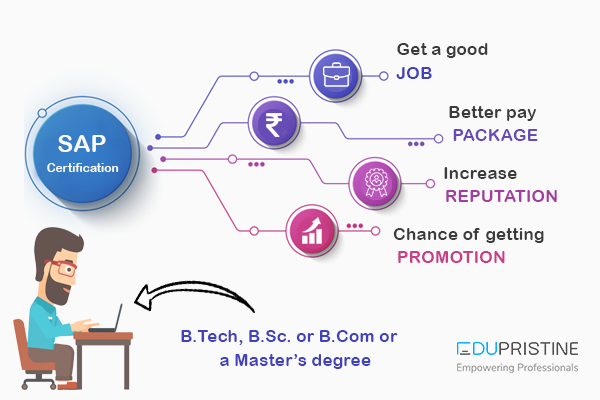
Why go for Financial Certifications ?
Why go for Financial Certifications
Job Profile of an Equity Researcher
Typical Day:
Equity research analysts start their day by attending various conference calls with firm’s traders and brokers, before the markets open. In these calls they discuss and share the investment recommendations for clients. They have to prepare the research reports and equity recommendations. To this end they spend a good part of the day doing research on the sector or industry or companies they cover. An analyst has to spend a great deal of time communicating with company’s management, retail sales force etc. To collect the information they often travel to visit companies and attend various industry conferences. They then analyze the information collected to review financial statements to estimate earnings and profits of the company. Using this knowledge they prepare detail report with recommendations and complex financial models. Thus the day begins quite early but extends late into the night and the equity research staff needs to keep themselves informed with the latest updates.